
4 New Square Chambers’ flagship Professional Liability and Regulatory Conference returns on Monday 24th November 2025 at The View, Royal College of Surgeons.
Renowned for being the top set in this field, our one-day conference gives you the opportunity to hear from leading experts who will bring insight into current issues in professional liability, regulatory and disciplinary law across a range of professions and sectors.
This conference is an essential event for anyone practising in this area and is a great opportunity to hear from renowned practitioners and meet like minded professionals.
Click here to download the conference programme.
Reserve your place by emailing events@4newsquare.com.
Address
The View at The Royal College of Surgeons
The View is a modern conference space in the heart of London with state of the art facilities and spectacular views across the city.
The College is centrally located at Lincoln’s Inn Fields, within easy walking distance of Holborn (Piccadilly and Central lines) and Temple (District and Circle lines) underground stations. It is a short taxi or underground journey from most major rail stations. Two NCP car parks are situated nearby in Covent Garden and Bloomsbury Square.
Accessibility
The building is fully accessible from street level with a ramp at the front entrance to the building and lift access to all floors.
If you have access needs, please let us know by calling 0207 822 2000 or by emailing
events@4newsquare.com
To register or if you have any queries, contact our events team on events@4newsquare.com
Join Helen Evans KC and Isabel Barter for a thought-provoking session on how artificial intelligence is transforming the professional world.
The Court of Appeal’s decision in Bratt v. Jones has clarified the orthodox basis for a finding of liability against a valuer: an unreasonable valuation derived from a negligent error. What does this mean for future claims? What might the Supreme Court decide in the event that they hear a suitable case? And what points about scope of duty and the margin of error should practitioners have in mind?
David Turner KC, Diarmuid Laffan & Iona Branford David, Diarmuid, and Iona will consider recent caselaw relevant to economic tort claims against professionals, and the potential for such claims to become more commonplace in light of decisions such as Vanquis v TMS [2025] EWHC 1599 (KB) and Lakatamia Shipping Co Ltd v Su and others [2025] EWCA Civ 1389.
Lucy and Anson discuss the evolving landscape of economic crime, focusing on new failure to prevent fraud laws and the responsibilities of professionals in light of corporate offences, including failure to prevent facilitation of tax evasion and the Proceeds of Crime Act.
Daniel Saoul KC and Teen Jui Chow There have been a number of recent appellate decisions of particular significance to professional liability cases with a fraud element, including decisions regarding accessory liability for torts, the doctrine of common design, fiduciary duties, dishonest assistance and knowing receipt as well as important judgments concerning statutory claims under Sections 423 and 213 of the Insolvency Act, amongst others. This talk will review the key cases and consider their practical impact on the pursuit or defence of fraud cases.
David Halpern KC and Hugh Evans The Supreme Court has had to rule on controversial issues involving fiduciary obligation on three separate occasions this year. David Halpern KC and Hugh Evans consider the relevance of these seminal decisions for professional liability lawyers.
Roger Stewart KC suggests that there is lack of intellectual and legislative clarity as to the proper role of regulation and its benefits and costs. Regulation has a vital role in any society but also has substantial inherent problems. The lack of clarity can lead to regulators expanding their empires whilst ignoring core functions. Regulation also gives the Courts excuses to avoid difficult questions as to the proper role and extent of the common law. Bad regulation, bad enforcement and undue deference by the Courts can lead to enormous and unjustified costs.
Clare Dixon KC, Ben Smiley and Theo Barclay The Mazur decision raised questions about who may conduct litigation and the role of unqualified fee earners. We look at the statutory background, the decision itself and the subsequent reaction of professional bodies. We also consider the costs challenges which are being made as a consequence of the decision.
Paul Parker, Benjamin Fowler and John Williams How does the Solicitors Disciplinary Tribunal approach questions of open justice, and in what circumstances can the ultimate sanction for dishonesty be avoided?
Sian Mirchandani KC and Kelly Yu URS v BDW is a Supreme Court decision with wide ranging ramifications, both positive and negative. The decision will affect everyone involved in construction or construction professionals’ claims involving the Defective Premises Act 1972. This talk will cover everything from what URS v BDW didn’t deal with (i.e. the physical and economic loss distinction and Pirelli) to what it did deal with (i.e. contribution claims and limitation periods).
Jamie Smith KC, Pippa Manby and Anthony Jones The session will consider claims for trading losses, the tricky and developing case law and attempt to suggest an analytical framework to guide consideration of whether such losses are recoverable or not. It will also consider the requirements of reliance and legal causation for such claims.
Alison Padfield KC, Peter Morcos and Charlotte Baker In this engaging session, Alison Padfield KC, Peter Morcos and Charlotte Baker discuss the developing case law on the Third Parties (Rights against Insurers) Act 2010 – with a particular focus on procedural, practical and tactical issues for third party claimants, insureds and insurers, both before and after the insolvency of an insured.
Ben Elkington KC and Miles Harris Where are we now after Dalamd v Butterworth Spengler, Norman Hay Plc v March Ltd [2025] EWCA Civ 58 and Watford Community Centre v Gallagher [2025] EWHC 743? The talk would consider what a claimant needs to prove in order to succeed in a claim against its broker (including whether it needs to prove that it had no cover with its insurer), and if and when damages will fall to be assessed on a “loss of the chance” basis.
A round-up of all the latest developments and reforms in costs and litigation funding.
Amanda Savage KC, Benjamin Archer and Will Birch Amanda, Ben and Will explore questions of limitation arising in claims brought against companies in liquidation. They will look at the recent decisions of Bilta v Tradition [2025] UKSC 18 and Transworld v First Curacao International Bank [2025] EWHC 2480 (Ch), and, in particular, Section 32 and the General Rolling Stock principle , in that context.

Call: 1986 Silk: 2001

Call: 1996 Silk: 2012

Call: 1995 Silk: 2015

Call: 1992 Silk: 2018
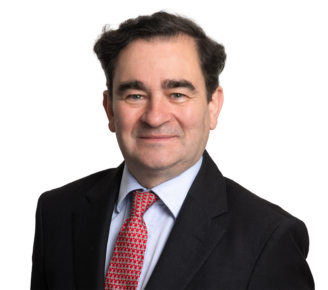
Call: 1994 Silk: 2018

Call: 1997 Silk: 2019
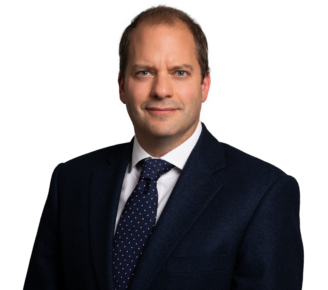
Call: 2008 Silk: 2019

Call: 1999 Silk: 2020

Call: 2002 Silk: 2021

Call: 2001 Silk: 2022

Call: 2008 Silk: 2026

Call: 1986

Call: 1987

Call: 2003

Call: 2007

Call: 2009

Call: 2010

Call: 2010

Call: 2011

Call: 2011

Call: 2012

Call: 2013

Call: 2014

Call: 2017
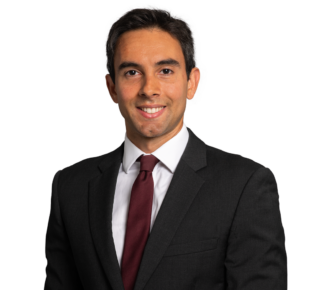
Call: 2017

Call: 2019

Call: 2020

Call: 2021
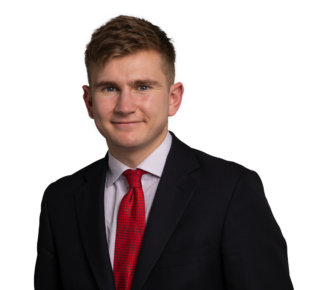
Call: 2021

Call: 2022

Call: 2023

Call: 2023
This event is free to attend but places are limited and will be allocated on a first come first served basis.
For more information and to RSVP, please contact our events team:

4 New Square
Lincoln's Inn
London, WC2A 3RJ
BARRISTERS REGULATED BY
THE BAR STANDARDS BOARD
Accessibility | Cookies | Disclaimer | Equality & Diversity | Privacy Policy | © 4 New Square Chambers – All Rights Reserved | Site by Tela.